
Evolution of Online Education Post Covid-19
For long, COVID 19 pandemic will be remembered for halting all activities across the globe. Education, particularly, was one of those sectors which had been completely jolted by the fear that the pandemic had spread. It is interesting to note that nearly 1.4 billion learners of all ages had their educational experiences disturbed as reported by UNESCO. In this case, we all resorted to technology and fell back on online teaching and learning to keep learning and growing. The COVID-19 pandemic forced colleges and universities to move their courses online while faculty, administrators, and staff worked remotely to protect millions of students and themselves.
Since then, remote courses, remote student support services, remote graduation ceremonies, and remote campus tours became the new norm, all aimed at controlling the rapid spread of this deadly virus. Students were forced out of schools, universities, and colleges and weren’t able to take education the way it was traditionally supposed to be imparted.
The students had to face challenges that initially stemmed from –
- logistics
- inadequate hardware & software, and
- curriculum and assessment adjustments.
A large and varied number of faculty and students were unprepared to teach or learn remotely. Lack of access to digital devices, the internet, and sufficient bandwidth further exposed the lingering issues of the digital divide. Many institutions lacked good online programs, sufficient instructional design and technology staff, appropriate course-development processes, and/or adequately structured student support mechanisms. Some of the teaching staff in universities and schools were aged and had trouble using digital devices to teach students. This all resulted in a lack of proper education for students.
ONLINE EDUCATION – THE ABUNDANT BENEFITS THAT IT BRINGS
There’s no need to discount the skepticism surrounding education through the internet. It’s hard to understand the notion of leaving behind the conventional classroom, especially if it’s to face this vast space called The Internet. However, that’s not reason enough to shy away from this alternative, which has proven to be valid and useful for many students. According to the most recent survey from Babson Survey Research Group, over 30 percent of higher education students in the United States are taking at least one distance course.
Online education is a sensible choice whether you’re a teenager or an adult. As a student, this can be a useful learning method for sharpening your skills in a difficult subject or learning a new skill. It teaches the students time management and discipline without having someone standing over their heads all the time. In the start remote learning was a very new concept for students and yes a lot of them struggled with it but now that the students are used to it, online education has proven to be very helpful. Students can work alongside learning. Be it part-time jobs, internships, or extra courses students can do all of those in the comfort of their own homes. For students having to travel long distances, it is extremely beneficial as it saves them a lot of time and money.
ONLINE LEARNING – THE NEW AGE GAME CHANGER
Among the many benefits of online learning, you’ll find virtual classrooms are great for people who are advancing their education while working. In this section, we will have a closer look at the broader benefits that online learning brings: –
- Flexibility is the Hallmark – In a traditional classroom, lectures will be scheduled at a specific time of day and your schedule will be formed around the availability of classes. If you’re currently employed and courses aren’t available after your working hours, it can be difficult to juggle a course load in addition to your work duties.
- Abundant Course Options to Choose from -Online classes bring an increased variety of education options. Since students are not required to travel to campus for courses scheduled on specific days and times, students can enroll in the courses they are most interested in.
- Convenience – There’s no need to rearrange schedules, students in an online program can take the course they want and complete the coursework at a time that is most convenient for them. Through online courses, students can gain the knowledge they need to earn their degree or grow in their profession.
- Pursue Multiple Courses at a time – Online courses allow you to earn essentially the same range of different degrees that can be earned from a traditional educational environment. That includes learning certificates and professional certifications for master’s degrees or doctoral degrees.
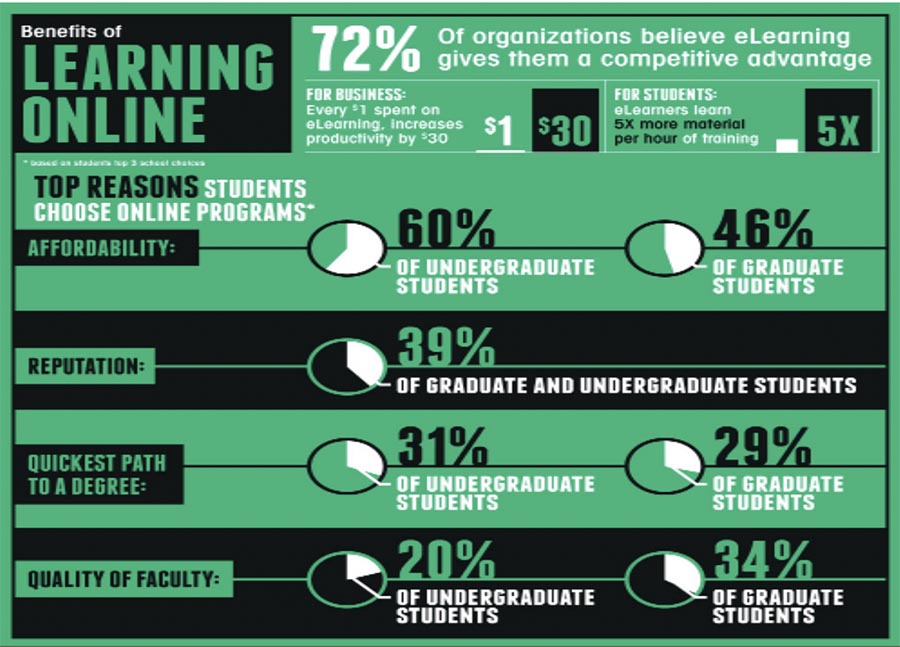
These are only a few reasons to not choose online education, and that’s apparently why 90 percent of students today think that online learning is the same or even better than the traditional classroom experience. Every student must assess their unique situation and decide according to their needs and goals, and while this alternative to traditional education may not be for everyone, it’s an incredibly convenient option with virtually endless options for students all over the world.
What Students of Undergraduate and Postgraduate have to say about Online Education
| Better | Same | Not Satisfied | |
| Undergraduate | 39% | 50% | 11% |
| Postgraduate | 52% | 38% | 10% |
