
Food for Thought: Ayesha Curry’s Innovative Approach to Education
In 2023, artificial intelligence will become the real deal. Stitch Fix is already using AI-enabled algorithms to recommend clothes to its customers that match their sizes and tastes. Some other major trends this year that can change the course of technology, innovation, and business are parts of the metaverse that will become real, progress in Web3, more sustainable technology, and much more.
But the question is with so much happening in the world, do we expect flying cars soon to launch? The world is progressing, no doubt but it is progressing only for a few. Others are still living from paycheck to paycheck. A report suggests that in the year 2021, approximately 216.4 million people around the world were unemployed. A major concern is the lack of education that is still at its brim which is holding the world back. According to a study by Global Education Monitoring Report, there are 781 million illiterate adults in the world.
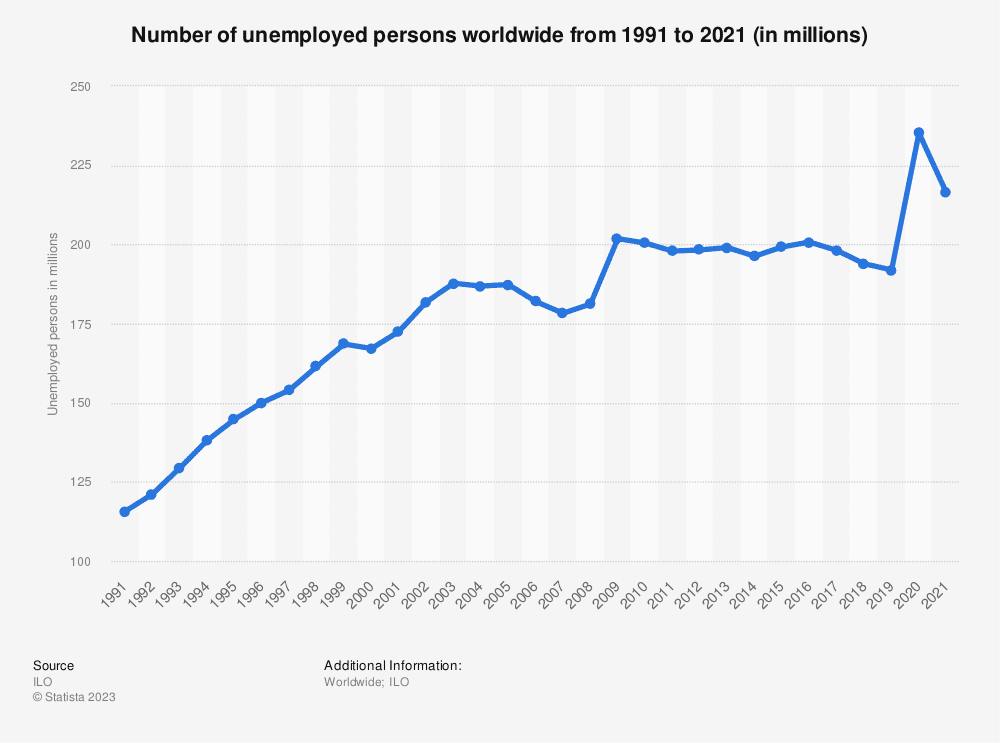
Source: Statista
People like Anne Sullivan, Friedrich Froebel, Savitribai Phule, and others have contributed immensely to the education industry. In the 21st century, there is one more name added to this list, that is, Ayesha Curry. Her husband, Stephen Curry, and she established a foundation named Eat, Learn, Play in July 2019 that focused on the full growth of children. It laid special emphasis on nutrition, quality education, and safe places to play and be active. Till date, the foundation has served over 25 million meals, invested 3.4 million USD in literacy programmes, and distributed over 500,000 books. Additionally, it has also hosted 10,000 kids at summer camps and introduced 3,000 kids to golf. Ayesha Curry is a firm believer that nutrition and education are interrelated. In the following sections, we will see how.
How are Nutrition and Education Related?
In an interview with Forbes, Ayesha Curry highlighted how nutrition and education are intertwined. She said, “If you are hungry and not well fed, your brain and body are not nourished, you don’t have the ability to function and learn … .You can not have one without the other.” She also added, “Nutrition and Education are sisters.”
Her speech took a toll on how the food and education industries were operating. This is not the first time that talks of bringing education and food together have surfaced. The issue first gained popularity when Jamie’s School Dinners television programmes aired in 2005. It raised awareness about the poor nutritional proportions of school meals and children’s preferences that are high in calories, fat, sugar, and salt.
It has raised many questions related to the current dietary practices of children that have led to an impact on the educational experience. In the UK, the Department for Education and Skills and the Department for Health has worked tirelessly to change and adapt to the current dynamics.
Studies have shown that the lack of certain nutrients, vitamins, etc. can make children irritable, slow down their progress and even cause more drastic changes such as personality change and mental health issues. For instance, the lack of vitamin B12 in early life can lead to poor performance in cognitive tests. Additionally, it is safe to say that a large portion of the impact on children comes from outside the school, in early life, before the commencement of school, and through parenting, advertising, & marketing. For instance, a study revealed that new moms who gave their kids lumpy food before the age of six months were less likely to have trouble with their eating habits.
How is Ayesha Curry Changing Education Outcomes Through Food?
The founder and CEO of Sweet July, Ayesha Curry has 5 international restaurants, is a New York Times bestseller, started a magazine and opened a production house, and much more. In the year 2018, she also made it to Forbes’s 30 under 30 list and nearly a year later she launched a lifestyle brand, that is Sweet July. But the truth be told that she is much more than the extravagant and lavish she looks. Despite that, the question remains how is she revolutionising education?
What is Eat, Learn, Play?
As we have discussed before, “Eat, Learn, Play” is an initiative by Ayesha Curry and Stephen Curry that focuses on the holistic development of children. The foundation’s three primary areas of focus are Health and Nutrition, Literacy, and Physical Activity. Established in 2019, with the motive “to unlock the amazing potential of every child by fighting to end childhood hunger, ensuring students have access to a quality education, and providing safe places for all children to play and be active.”
Soon after the announcement of the foundation, the pandemic hit. During those appalling times, they tirelessly worked to collaborate with local partners to introduce a meal distribution system for the people of Oakland.
Now, let’s take a look at Eat, Learn, Play in numbers:
- The foundation has raised and invested 38 million USD
- It has supported 27 community partners
- Also, the foundation has reached 1,50,000 youths
- They have invested 3.4 million in literacy programmes and distributed 5,00,000 books
- It has produced 25 million meals and 2.1 million pounds of food and served to kids and families
Evidently, it reflected that Ayesha Curry and Stephen Curry’s motives have not wavered since the launch.
What is the future according to Ayesha Curry?
In the interview with Forbes, she talked about how much they have done so far, and yet there is so much left. When asked, what is the future of “Eat, Learn, Play”, she said that the upcoming years will focus on the “Learn” pillar with a special focus on the literacy of young children and reading. She also told the ugly truth that only 20% of public schools have a library for kids to access books. Her initiative is working with little town libraries to put 150 libraries across the community to make education more accessible and give free books. She says that “Just like food, literacy is at the forefront of determining somebody’s entire future.”
She also added that for the upliftment of the community and to see more children going to school, there should be more changes in policies.
What’s in It for India?
Ayesha Curry’s initiative does not directly influence India but it is definitely a great source of inspiration. In fact, India has its own government initiatives and many NGOs working for a similar cause. One such example is the Mid-Day Meal Scheme which was recently revamped and renamed as PM POSHAN. Initially, the scheme was started in India on 15th August 1995 under the National Programme of Nutritional Support to Primary Education.
The new and revamped scheme was launched for 5 years, that is, from 2021-22 to 2025-26 with a budget of Rs 1,30,794.90 crore with the intention to serve 11.8 crore children. It was established with the following objectives:
- The scheme aims to increase the enrolment of children of less-advantage groups.
- It also focuses on helping students to attend schools regularly, thus, have a minimum attendance. Additionally, retain children of classes 1-8.
- It also offers nutritional assistance to elementary-stage children in drought-affected areas.
Another scheme that was launched was the Targeted Public Distribution System (TPDS). It gives a strong emphasis on implementing and identifying the poor in order to plan and deliver food supplies more effectively. As a result, the Targeted Public Distribution System pays a special focus on the people below the poverty line.
TPSD was launched in 1997 and is an initiative that is jointly managed by the Central and State Governments. And they dealt with different parameters of the scheme to avoid clase and effective governance.
The Central Government is responsible for:
- Procurement of food grains
- Allocation of food grains
- Transportation of food grains to designated depots of the Food Corporation of India (FCI).
The State Government is responsible for:
- Allocation and Distribution of foodgrains within the state.
- Identification of eligible beneficiaries.
- Issuance of ration cards.
Over time, the Indian government has taken various measures to abolish hunger in the country and promote education. Along with them, various NGOs such as the Centre for Public Health and Food Safety, Rise Against Hunger India, Akshaya Patra, and others are working tirelessly for the same cause.
India has its fair share of schemes and initiations, what’s left of it is the awareness among poor people and the contribution of the privileged. Hence, this is a call for the people who believe in this righteous enterprise.
Tags: ayesha curry, ayesha curry eat foundation, eat foundation, education and nutrition, inspiration